
Root Canal Treatment in Rego Park, NY
Root canal treatment in Rego Park is available at Affordable Dental Care PC, where Dr. Marina Pinkhasova has saved infected and damaged teeth for Queens patients since 1998. A root canal relieves the pain of an infected tooth and lets you keep it instead of pulling it. Modern techniques and thorough numbing make the procedure no more uncomfortable than a filling for most patients, and we see toothache patients quickly, often the same day, from Rego Park, Forest Hills, Astoria, and across Queens.
After removing the infected pulp and sealing the tooth, we restore it with a dental crown made in-house, so the entire treatment stays in one office with one written estimate. If you are in pain right now, call our emergency dentist line and let us know. If you are also experiencing gum-related issues, our periodontics services may be needed alongside treatment. Patients who experienced dental trauma in a car accident may qualify for care under no fault insurance. Call us at (718) 897-3434 to learn more.
When Is a Root Canal Needed?
Inside every tooth is soft tissue called pulp, which holds the nerve and blood supply. When deep decay, a crack, a failed filling, or an injury lets bacteria reach the pulp, it becomes inflamed or infected. The pulp cannot heal on its own, and without treatment the infection spreads to the root tip and the surrounding bone, where it can form an abscess. A root canal removes the infected pulp, disinfects the inside of the tooth, and seals it, which stops the pain and saves the tooth.
Signs that a tooth may need a root canal include:
- Severe or throbbing toothache, especially when biting or chewing
- Sensitivity to hot or cold that lingers after the food or drink is gone
- Swelling or tenderness in the gum near the tooth, or a small pimple-like bump on the gum
- A tooth that has darkened or turned gray
- A cracked, chipped, or deeply decayed tooth
- Fever or facial swelling, which can signal an abscess and needs same-day care
Some infected teeth cause no pain at all and are found on an X-ray during a routine dental checkup. If you are unsure, our page on whether you need a root canal walks through the warning signs in more detail, and an exam at our Rego Park office gives you a clear answer.
“The pulp cannot heal on its own. A root canal stops the pain and saves the tooth.”
Benefits of Root Canals
Root canals can help patients avoid tooth extraction. During a root canal, a dentist works to restore a decayed or damaged tooth. This treatment can preserve smiles, prevent future decay, and strengthen damaged teeth.
Preserving a patient’s smile
Extractions can leave gaps in the patient's smile. Many patients feel self-conscious about their appearance after having a tooth pulled. Root canals boost the patient's confidence and enhance their appearance.
Preventing future decay
During a root canal, the provider removes all decay and infection. They clean the inside of the tooth to prevent the infection from returning. Without a root canal, decay can spread throughout the patient's mouth.
Strengthening a damaged tooth
Decayed teeth are vulnerable to breakage and injury. As part of a root canal procedure, the provider attaches a crown. This tooth-colored cap protects and supports the tooth.
“Without a root canal, decay can spread throughout the patient’s mouth.”


What Happens During a Root Canal at Our Rego Park Office
Most root canals at Affordable Dental Care PC are completed in one or two visits, with the crown placed afterward. Here is what to expect:
- Exam and X-ray. We confirm the diagnosis, check the shape of the root canals, and go over the treatment plan and a written estimate.
- Numbing. The tooth and surrounding area are fully anesthetized. Patients with dental anxiety can ask about comfort options before the visit.
- Isolation. A small rubber shield is placed around the tooth to keep it dry and protect the rest of the mouth from bacteria.
- Cleaning and shaping. Through a small opening in the top of the tooth, we remove the infected pulp, clean and disinfect each canal, and shape it to receive the filling.
- Filling and sealing. The canals are filled with a biocompatible material called gutta-percha and sealed. A temporary filling closes the opening if the crown is placed at a later visit.
- Crown. A custom dental crown protects the treated tooth from fracture and restores full chewing function. Front teeth with minimal damage can sometimes be restored with a filling instead.
Root canals have a success rate of up to 98 percent according to published research, and a properly restored tooth can last as long as your natural teeth. In the rare case that a tooth cannot be saved, we discuss extraction and replacement options with you before anything is done.
“Most root canals at our office are completed in one or two visits, with the crown placed afterward.”
Root Canal Cost in Rego Park
The cost of a root canal depends on which tooth is involved. Front teeth have a single canal and cost the least; premolars have one or two; molars have three or four and take the most time. The crown that follows is a separate fee. Most dental insurance plans cover a significant portion of root canal treatment because it is a medically necessary procedure, and we also treat patients through No-Fault insurance when a tooth was damaged in a car accident, and through Workers Compensation for on-the-job injuries.
Before treatment begins, we verify your benefits and give you a written, itemized estimate covering the root canal and the crown so there are no surprises. Patients without insurance receive clear self-pay pricing. For a detailed breakdown of typical fees by tooth type, read our guide to how much a root canal costs in Queens. A root canal plus crown costs more than an extraction up front, but far less than replacing the tooth with an implant later, which is why saving the tooth is usually the better long-term value.
“A root canal plus crown costs more than an extraction up front, but far less than replacing the tooth later.”
Recovery and Aftercare
Most patients return to work or school the same day. The tooth and surrounding gum may feel tender for two to four days, which over-the-counter pain relievers handle well. Until the permanent crown is placed, chew on the other side of your mouth and avoid very hard or sticky foods, since a tooth with a temporary filling is more fragile. Brush and floss normally. Call us if pain increases after the first few days, if swelling develops, or if the temporary filling comes out.
Once the crown is in place, the tooth needs nothing more than the care you give the rest of your teeth: twice-daily brushing, daily flossing, and regular checkups and cleanings so we can monitor it over time.
“Most patients return to work or school the same day.”
Check out what others are saying about our dental services on Yelp: Root Canal Treatment in Rego Park, NY
Preventing the Need for Root Canal Treatment
Although root canals are effective procedures to restore infected or damaged teeth, it is best to avoid the need for a root canal in the first place. Preventing the need for root canal treatment is simple, maintain a good oral hygiene routine. Since root canals are often necessary due to tooth decay, people can help prevent this by brushing twice and flossing once every day.
It is also essential to attend regular dental appointments and seek dental attention as soon as possible when pain or discomfort arises. People can also take certain actions to avoid tooth damage than can necessitate root canal treatment. This includes avoiding acidic foods and beverages, not chewing on ice, and wearing a mouthguard while playing sports and at night if teeth grinding occurs.
“Although root canals are effective procedures to restore infected or damaged teeth, it is best to avoid the need for a root canal in the first place.”
Questions Answered on This Page
Q. How can someone prevent the need for a root canal?
Q. What are the benefits of a root canal?
Q. What happens during root canal treatment?
Q. How much does a root canal cost in Rego Park?
Q. What is recovery like after a root canal?
Q. What are some alternatives to a root canal?
People Also Ask
Q. Is increased sensitivity to temperature a sign that endodontic surgery is necessary?
Q. Who performs restorative dentistry?
Q. Are root canals a safe and common procedure?
Q. Are there any alternatives to root canals?
Q. How can you save a tooth with a root canal?
Q. Are pain and tenderness when touching the teeth or chewing a sign of a problem?
Q. What are the services offered endodontists vs. general dentist?
Root Canal Alternatives
When a tooth is cracked below the gumline, has too little structure left to support a crown, or has an infection that has destroyed the surrounding bone, extraction may be the only option. Removing the tooth resolves the infection, but the gap it leaves can cause neighboring teeth to shift and bone to shrink, so we recommend replacing it with a dental implant or bridge. Whenever a tooth can be saved, a root canal is the better choice for your long-term oral health and usually the less expensive one over time.
“Extractions can resolve deep infections by removing the affected tooth.”


Frequently Asked Questions
Q. What is a root canal?
A. A root canal removes infected or inflamed pulp from inside a tooth. Pulp is the soft tissue that carries the tooth's nerve and blood supply. The dentist cleans and disinfects the canals, fills and seals them, and then protects the tooth with a crown so it can function normally for years.
Q. What are some alternatives to a root canal?
A. Root canals are the best option for most patients because they preserve the natural tooth, which prevents bone loss, shifting, and bite problems. The only real alternative is extraction, after which the tooth should be replaced with an implant or bridge. If the tooth is too damaged to save, we will recommend extraction and explain the replacement options.
Q. Are root canals painful?
A. No. With modern anesthetics the procedure itself feels much like getting a filling. The pain most people associate with root canals is the toothache before treatment, which the root canal relieves. Mild soreness for a few days afterward is normal and responds to over-the-counter pain relievers.
Q. How much do root canals cost?
A. Cost depends on the tooth: front teeth cost the least and molars the most, and the crown is a separate fee. Most dental insurance plans cover a significant portion of root canal treatment. We verify your benefits and give you a written estimate for the root canal and crown before treatment begins, and patients without insurance receive clear self-pay pricing.
Q. How long does a root canal take?
A. A single-canal front tooth often takes about an hour. Molars with three or four canals take longer and may be done over two visits. The crown is usually placed at a separate appointment once the tooth has settled.
Q. Do I need an endodontist, or can a general dentist do my root canal?
A. General dentists perform most routine root canals. An endodontist is a specialist for complex cases such as unusually curved canals, retreatment of a failed root canal, or surgery at the root tip. Our Rego Park office performs root canals in-house and refers to an endodontist only when a case calls for it.
Q. Can I get a same-day root canal for a toothache in Rego Park?
A. In many cases, yes. Call (718) 897-3434 and tell us you are in pain. We hold time for emergency patients at our Queens Boulevard office, and if a full root canal cannot be completed the same day, we can usually relieve the pain and begin treatment, then finish at a follow-up visit.
Q. Can children receive a root canal?
A. Yes, on permanent teeth. For a severely decayed baby tooth, the dentist may recommend extraction if the tooth will soon fall out on its own, or a baby root canal (pulpotomy) to preserve the tooth and prevent the infection from spreading.

Scan here to view this page, Root Canal Treatment, on mobile



Endodontic Terminology
Call Us Today
A toothache rarely gets better on its own. If you need root canal treatment in Rego Park, call Affordable Dental Care PC at (718) 897-3434. We see patients from Forest Hills, Astoria, and across Queens, hold time for emergencies, and give every patient a written estimate before treatment.
Helpful Related Links
- American Dental Association (ADA). Glossary of Dental Clinical Terms. 2025
- American Academy of Cosmetic Dentistry® (AACD). Home Page. 2025
- WebMD. WebMD’s Oral Care Guide. 2025
About our business, license, and website security
- Affordable Dental Care PC was established in 1998.
- We accept the following payment methods: American Express, Cash, Check, Discover, MasterCard, and Visa
- We serve patients from the following counties: Queens
- We serve patients from the following cities: Queens
- NY (License #458341). View License Information and Specifics
- National Provider Identifier Database (1205042033). View NPI Registry Information
- Healthgrades. View Background Information and Reviews
- Norton Safe Web. View Details
- Trend Micro Site Safety Center. View Details

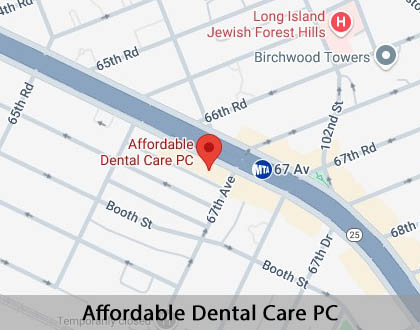
Scan here to open directions to Affordable Dental Care PC on mobile
Back to top of Root Canal Treatment
Related Posts

Dental Emergency For An Oral Soft Tissue Injury
A dental emergency can happen at any time, particularly to the soft tissue in your mouth. This guide will go over what kinds of emergencies can occur and what steps you should take afterward. This will help you to take care of yourself, whether you are currently experiencing an injury in your mouth or you’re…
How To Find The Right Dentist If You Have Dental Anxiety
If the thought of a dental appointment makes your chest tighten, you are in good company. More than a third of adults report some level of dental anxiety, and a significant number put off care for years because of it. The problem is that avoidance makes the eventual visit harder: small issues grow into bigger…

Choosing A Family Dentist In Rego Park: What Parents Should Look For
When you have children, "finding a dentist" quickly turns into finding three or four dentists: one who is good with a nervous five-year-old, one who can handle a teenager's orthodontic questions, and one for the adults in the house. Most Rego Park parents would rather have a single office that can do all of it,…

How To Find A Dentist Who Accepts Your Insurance In Rego Park, NY
Dental insurance should make care easier, but for many Queens residents it adds a layer of confusion to an already stressful search. You find a dentist you like, book the visit, and then learn at the front desk that your plan is not accepted or that the office is out-of-network. The good news is that…
Explore additional topics covered on our website:
Call Us Today

Scan here to call Affordable Dental Care PC on mobile